
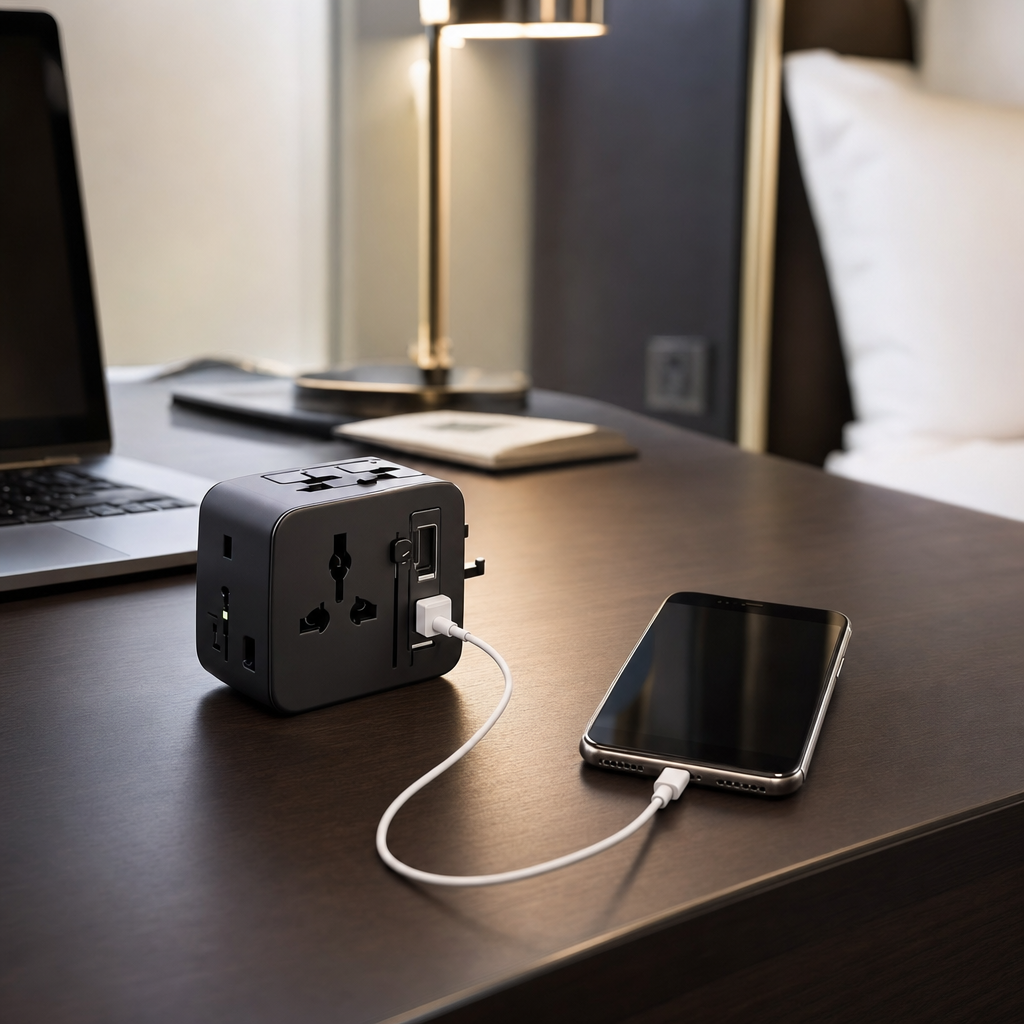
Understanding International Plug Standards
When traveling internationally, one of the most fundamental challenges you will face is differing electrical standards. Countries around the world use various plug configurations, socket shapes, and voltage levels. For example, North America primarily uses Type A and Type B plugs with 120 volts, while much of continental Europe relies on Type C, E, and F plugs operating at 230 volts. The United Kingdom and its former territories often utilize the bulky three-prong Type G plug. Understanding these geographical differences is the first step toward keeping your electronic devices powered up safely and efficiently during your journey.
Without the correct adapter, you simply cannot physically connect your device charger to a foreign wall outlet. However, many travelers make the mistake of assuming that all adapters offer the same level of global coverage. A standard single-country adapter purchased for a trip to Italy will be completely useless if you later visit Australia or Japan. This limitation highlights the immense value of investing in a truly versatile device designed to bridge the gap between dozens of different regional electrical systems. Knowing your destination’s specific requirements ensures you avoid frustrating arrival day surprises at your hotel.
How Universal Adapters Work
A universal travel adapter functions by incorporating multiple sliding mechanisms, rotating pins, or interchangeable modules into a single, compact housing. Instead of carrying a massive bag filled with individual adapters for the UK, Europe, Asia, and the Americas, you carry one clever device that reconfigures itself on demand. By pushing a slider or twisting a dial, you extend the specific prongs required for your host country. This engineering marvel eliminates guesswork and significantly reduces the physical clutter inside your luggage, making it an indispensable companion for frequent flyers and vacationers alike.
Most modern universal models cover over 150 to 200 countries by combining the most common plug configurations into one body. They typically feature a universal receptacle on the front face, which means you can plug in devices with American, British, European, or Australian prongs. The internal copper pathways route the electricity safely from the foreign wall socket through to your personal device charger. While these tools are remarkably flexible, it is vital to remember that they only change the physical shape of the plug and do not alter the underlying electrical voltage coming from the wall.
The Crucial Difference Between Adapters and Converters
One of the most dangerous misconceptions in international travel involves confusing power adapters with voltage converters. A universal travel adapter merely acts as a physical bridge, allowing your plug to fit into a foreign socket without transforming the electrical current. If you plug a device designed exclusively for 120 volts into a 230-volt European outlet using only an adapter, the device may overheat, spark, or permanently burn out. Travelers must carefully inspect the input rating printed on the power brick of every electronic device they intend to bring abroad before departure.
Fortunately, the vast majority of modern consumer electronics—including smartphones, laptop computers, digital cameras, and tablet chargers—are dual voltage. This means they are internally engineered to handle anywhere from 100 to 240 volts automatically. High-wattage heating appliances like hair dryers, curling irons, and clothing irons are frequent exceptions and often run on single voltages. If you travel with these appliances, a simple adapter will not protect them; you would need a heavy, specialized voltage converter, though most travel experts recommend leaving high-wattage heating tools at home.
Key Features to Look For
When shopping for high-quality global power accessories, safety certifications should always be your top priority. Look for products that feature reputable testing marks such as CE, FCC, or RoHS, which indicate adherence to strict international electrical safety standards. Additionally, a reliable device should include built-in surge protection and replaceable fuses to safeguard your expensive electronics against sudden power spikes or grid instability in unfamiliar countries. Fuses act as a crucial final line of defense, sacrificing themselves to save your laptop or smartphone from catastrophic electrical damage.
Modern travel demands versatile charging options, making built-in USB ports an essential feature for any top-tier universal power accessory. Models that include multiple USB-A ports and high-output USB-C Power Delivery ports allow you to charge your phone, camera, and power bank simultaneously without sacrificing the main AC socket. This design is particularly useful in older hotel rooms that may only feature a single working wall outlet for the entire room, maximizing your overall charging efficiency while minimizing bulky wall bricks.
- Built-in replaceable fuse with a spare included in the housing
- Multiple USB-C and USB-A charging ports for direct cable connections
- Compact, all-in-one sliding mechanism without loose removable parts
- Safety shutters on AC outlets to prevent accidental foreign object insertion
- Wide compatibility covering over 150 countries across all major continents
Practical Packing and Usage Tips
Packing your power gear correctly can save you immense hassle during transit and upon arrival at your destination. Always pack your adapter in your carry-on luggage rather than your checked bags, especially if the model includes built-in lithium batteries or power bank capabilities, which are strictly prohibited in the cargo hold by international aviation authorities. Keeping your adapter accessible in your backpack also allows you to recharge your phone during long layovers at international airports where socket types can vary wildly between terminal gates.
Once you arrive at your accommodation, take a moment to inspect both the wall outlet and your adapter before plugging anything in. Ensure that the prongs are fully extended and locked into their correct position; partially extended pins can cause dangerous sparking, loose connections, or damage to the internal socket contacts. If you are traveling with a heavy power strip or multiple cords, be mindful that heavy cords can leverage the adapter downward, causing it to slip out of loose wall sockets common in older historical buildings.
Frequently Asked Questions
Do universal travel adapters convert voltage?
No, universal travel adapters only change the physical shape of your plug to fit foreign sockets. They do not alter electricity voltage. Your devices must be dual-voltage to work safely abroad.
Can I use a hair dryer with a universal adapter?
Usually no, unless your hair dryer is explicitly rated as dual voltage and your adapter can handle high wattage. Standard travel hair dryers often require heavy voltage converters instead.
Why do some adapters have replaceable fuses?
Replaceable fuses protect your expensive electronics by blowing out if there is a power surge or electrical overload, preventing the surge from reaching your connected laptop or phone.
Are universal adapters allowed in checked luggage?
Standard plastic plug adapters are fine in checked bags, but models featuring built-in power banks or lithium batteries must be packed in your carry-on luggage per airline safety rules.
Article Was Generated By AI.