
Understanding Why the Right First Guitar Matters
Embarking on your musical journey is an exciting milestone, and selecting the right instrument lays the foundation for your ongoing success and enjoyment. Many aspiring musicians make the mistake of picking up any inexpensive instrument they find, only to discover that poor craftsmanship makes learning unnecessarily painful. When a guitar has a high string action or a warped neck, pressing the strings down requires excessive finger strength, leading to rapid fatigue and frustration. Investing a modest amount of time into understanding what makes a beginner-friendly instrument helps you bypass these common hurdles and keeps you motivated during those crucial first few weeks of practice.
Beyond physical comfort, a properly set up beginner guitar produces an inspiring tone that rewards your daily practice sessions. When an instrument sounds resonant and clear, you are far more likely to pick it up regularly and experiment with new chord shapes or strumming patterns. Furthermore, starting with a reliable instrument ensures that it stays in tune reasonably well, training your ear to recognize correct pitches from the very beginning. By prioritizing playability, structural integrity, and ergonomic design, you set yourself up for a smooth transition from absolute novice to confident intermediate player without developing bad habits caused by faulty equipment.
Navigating Acoustic Guitar Body Shapes and Sizes
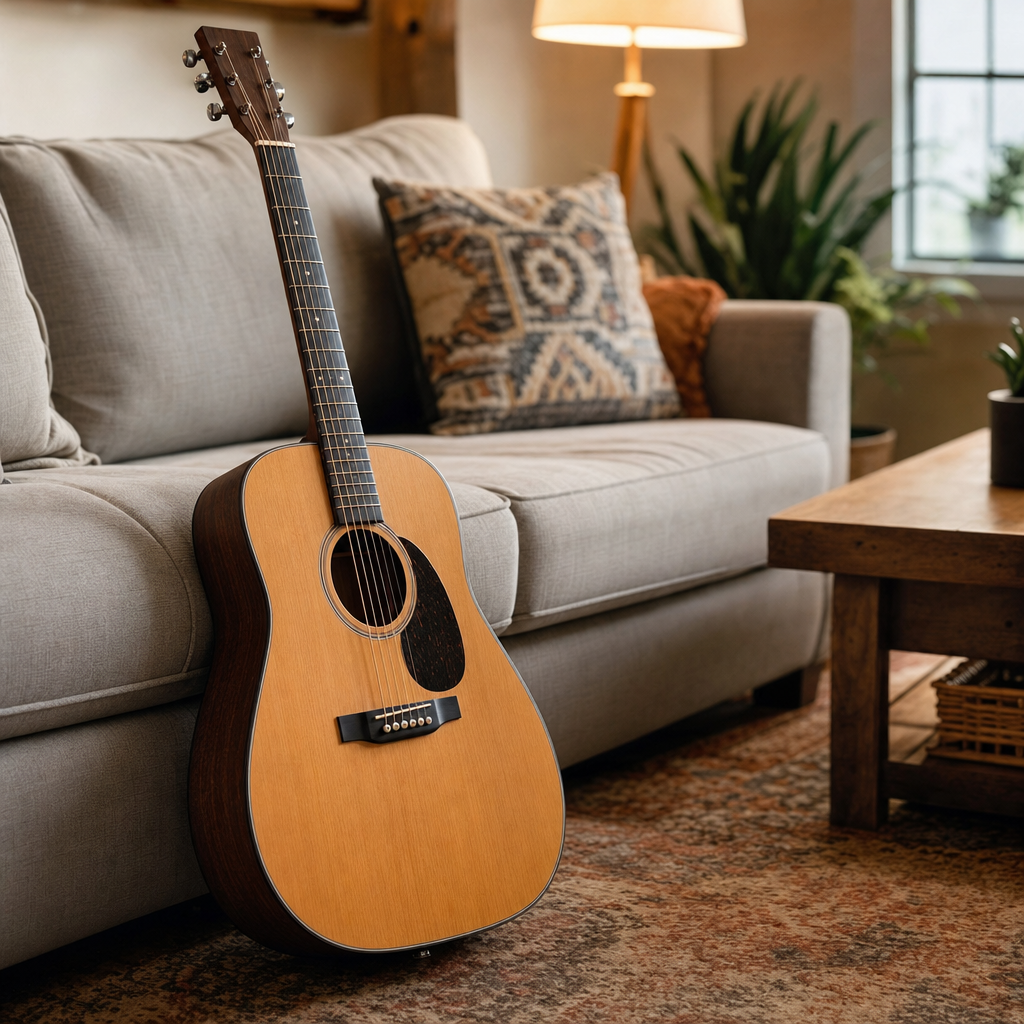
Acoustic guitars come in a wide variety of body shapes, and each design impacts both the physical comfort of the player and the overall acoustic projection. The dreadnought is perhaps the most iconic and recognizable shape, known for its large body and booming, bass-rich projection that suits folk and bluegrass styles. However, this large body can feel bulky and overwhelming for younger players, smaller adults, or anyone with a shorter reach. Understanding how different dimensions rest against your torso is essential because physical comfort directly correlates with how long you can comfortably practice without experiencing shoulder strain or awkward wrist angles.
For players who prefer a more ergonomic experience, concert and grand concert body shapes offer a significantly narrower waist and a more compact lower bout. These smaller dimensions tuck easily under the arm, making them fantastic choices for singer-songwriters, fingerstyle players, and beginners of all ages. Parlor guitars represent another excellent alternative, featuring an even smaller, vintage-inspired body that prioritizes midrange warmth and intimate portability over room-filling volume. Evaluating your physical stature alongside your musical aspirations ensures you select a body shape that encourages good posture and makes daily practice an absolute pleasure rather than a physical chore.
Evaluating Tonewoods and Construction Quality
The materials used to construct an acoustic guitar play a defining role in its overall sound quality, durability, and eventual price tag. Most entry-level instruments feature either all-laminate construction or a combination of laminate back and sides with a solid wood top. Solid wood tops, typically crafted from spruce or mahogany, vibrate more freely and actually improve in tone as the instrument ages and resonates over time. Laminate woods, while offering less acoustic depth, provide incredible resistance to humidity and temperature fluctuations, making them remarkably durable choices for casual players who travel frequently or live in demanding climates.
When inspecting potential instruments, look closely at the joinery, the straightness of the neck, and the smoothness of the frets along the fingerboard edges. A well-built beginner guitar should exhibit clean glue joints, a smoothly sanded neck profile that fits comfortably in your hand, and bridge pins that sit securely in the soundboard. Paying attention to these manufacturing details helps you avoid instruments with structural flaws that could worsen over time and render the guitar unplayable. Consulting reviews and handling instruments in person allows you to appreciate the subtle differences in craftsmanship across various budget-friendly brands.
Essential Features and Practical Buying Checklist
Shopping for your first acoustic guitar involves analyzing specific hardware components that dictate tuning stability and long-term playability. Enclosed gear tuning machines, for instance, hold string tension much better than open-gear alternatives and resist dust accumulation over years of use. Additionally, the nut and saddle materials influence intonation and sustain, with synthetic bone or actual bone components outperforming cheap plastic nuts found on ultra-budget models. Checking these hardware specifications ensures your instrument remains reliable and accurate as you progress through your initial chord manuals and exercise books.
To streamline your shopping experience, keep a mental or written checklist of vital criteria to evaluate before making any final purchasing decision. Consider the following points when comparing different starter instruments to ensure you get the absolute best value for your investment:
- Verify that the string action is low enough to press comfortably without excessive finger pain.
- Check the neck relief to ensure there is no excessive bowing or warping along the fretboard.
- Ensure the scale length matches your hand size, with shorter scales suiting smaller hands.
- Inspect the finish for any cosmetic cracks, uneven spraying, or sharp fret ends.
- Confirm whether the instrument includes strap buttons or requires an external strap adapter.
Must-Have Accessories for Your New Instrument
Purchasing the guitar itself is only the first step; outfitting yourself with the right supportive gear makes your daily practice routine significantly easier. A reliable electronic tuner is arguably the most critical accessory, ensuring you never practice on an out-of-tune instrument that could train your ear incorrectly. Clip-on chromatic tuners attach directly to the headstock and measure string vibrations accurately even in noisy environments, making them indispensable tools for beginners. Pairing your tuner with a sturdy guitar stand encourages you to leave your instrument out in the room, drastically increasing the likelihood that you will practice spontaneously throughout the day.
Protection and maintenance items are equally important for safeguarding your investment against environmental damage and physical impacts over time. A padded gig bag or a hard-shell case shields your guitar from accidental bumps, dust, and temperature shifts when you travel to lessons or jam sessions. Furthermore, keeping a simple microfiber cloth and a dedicated pack of replacement strings in your case ensures you can clean off finger oils and refresh your tone whenever dead-sounding strings hinder your progress. Investing in these foundational accessories completes your setup and prepares you for a rewarding musical journey ahead.
Frequently Asked Questions
Should a beginner buy a nylon-string or steel-string acoustic guitar?
Nylon-string classical guitars feature softer strings that are gentler on tender fingertips, making them ideal for younger players or classical styles. Steel-string guitars offer a brighter, louder sound associated with pop, rock, and folk music, but require building up finger calluses.
How much should I expect to spend on a good beginner acoustic guitar?
A reliable entry-level acoustic guitar typically ranges from one hundred and fifty to three hundred dollars. Spending within this bracket generally guarantees decent intonation, acceptable playability, and solid construction quality without overspending on professional features.
Can I learn to play acoustic guitar without taking formal lessons?
Yes, many players successfully learn using online video tutorials, mobile apps, and instructional books. However, taking even a few foundational lessons can help you establish correct posture and hand positioning early on.
How often do acoustic guitar strings need to be changed?
For regular practice, changing your strings every one to three months is recommended. If strings start sounding dull, look tarnished, or refuse to stay in tune, it is definitely time for a fresh set.
Article Was Generated By AI.