
Introduction to Travel Organization Systems
When preparing for a journey, keeping luggage neat and tidy often feels like a frustrating puzzle. Travel organizers known as packing cubes have transformed how people approach suitcase management by offering structured compartments for different types of garments. Instead of throwing shirts, trousers, and undergarments into a chaotic jumble, travelers use these zippered fabric containers to categorize their belongings systematically. This foundational shift in packing methodology means you spend less time searching for a specific pair of socks and more time enjoying your destination.
The modern travel accessories market features countless variations, making the search for the best packing cubes an exercise in understanding your personal packing style. Some people prefer ultralight mesh pouches that prioritize weight reduction for backpacking adventures, while others lean toward structured, heavy-duty nylon shells designed for business trips. Evaluating your typical vacation duration and the types of clothes you usually bring will help you narrow down the vast array of available options without feeling overwhelmed by unnecessary features or gimmicky designs.
Key Features of Quality Travel Organizers
Examining the physical construction of storage pouches reveals why certain models consistently rank among the best packing cubes on the market. Zippers represent the most critical mechanical component; cheap zippers frequently snag on fabric or break under pressure when a compartment is slightly overfilled. Look for reputable hardware brands like YKK that offer smooth, reliable gliding action across multiple corners. Additionally, reinforced stitching along the seams prevents fraying and ensures your organizational containers survive repeated trips through airport security and baggage handling.
Fabric choice heavily dictates both durability and visibility inside your luggage. Nylon and polyester are the industry standards because they combine water resistance with exceptional tear strength, protecting your clothes from unexpected spills or damp hotel environments. Many top-tier options incorporate breathable mesh panels on the top lid, which serves two distinct purposes. First, the mesh allows you to instantly identify the contents of each pouch without unzipping it. Second, it promotes continuous airflow, which prevents musty odors from developing during long-haul flights or multi-destination itineraries.
Consider these essential structural factors when comparing different luggage divider brands:
- Dual zipper pulls that allow opening from any angle or partial unzipping for easy access.
- Sturdy top grab handles that make pulling a fully loaded container out of a backpack effortless.
- Semi-rigid internal framing or piping that helps the containers maintain their rectangular shape.
- Water-repellent coatings that shield garments from minor liquid accidents inside the suitcase.
Standard Versus Compression Storage Designs
A major decision when selecting the best packing cubes involves choosing between traditional single-layer pouches and advanced compression models. Standard organizers act essentially like drawers within your suitcase, keeping items neatly segregated and preventing clothes from shifting around during transit. They work wonderfully for casual travelers who pack moderate amounts of clothing and prioritize ease of access above all else. Because they maintain a fixed profile, they are exceptionally simple to load and unload in hotel rooms without requiring any extra physical effort.
Compression organizers, on the other hand, feature a secondary zipper system designed to squeeze excess air out of bulky items like sweaters, jackets, and denim. By utilizing durable polyester walls and robust compression zippers, these specialized containers can reduce the volume of your clothing by up to thirty percent. This spatial efficiency is invaluable for travelers relying exclusively on carry-on luggage to avoid checked bag fees and long baggage claim waits. However, keep in mind that compressing your clothes does not reduce their weight, so you still need to monitor airline baggage limits carefully.
Practical Packing Strategies for Maximum Efficiency
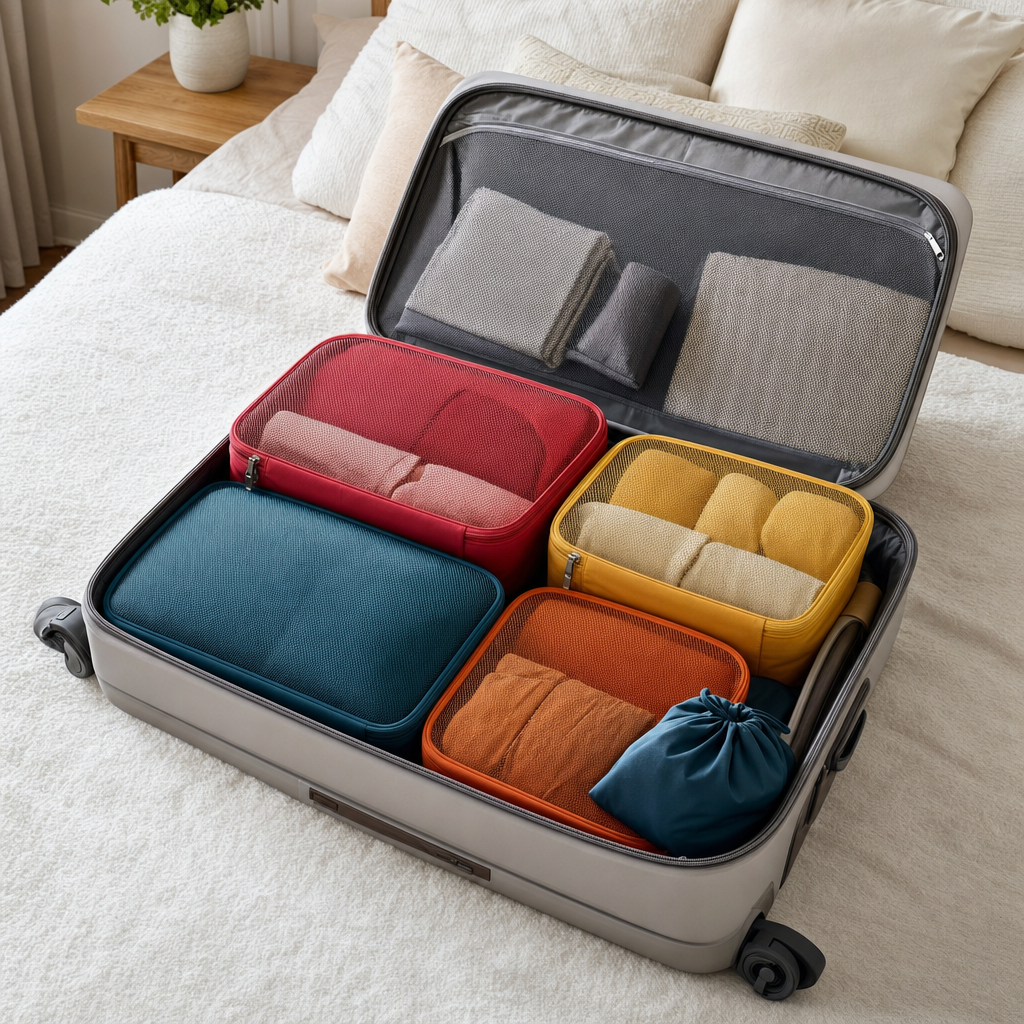
Owning high-quality luggage organizers is only half the battle; knowing how to load them properly transforms your packing experience entirely. Rolling garments rather than folding them flat is a universally recommended technique that pairs exceptionally well with rectangular storage pouches. Rolled clothing fits snugly side-by-side inside the containers, minimizes creasing, and allows you to see every single shirt or pair of shorts at a glance. You can also organize items outfit by outfit, placing a complete daily ensemble into a single medium-sized pouch for ultimate convenience.
Strategic placement of your filled containers within the main suitcase further optimizes weight distribution and prevents shifting. Place heavier items, such as shoes in protective bags and heavy denim, near the bottom wheels of your rolling suitcase to maintain stability when upright. Lighter garments and delicate fabrics should sit near the top or be cushioned between sturdier pouches. By treating your suitcase like a modular grid, you eliminate wasted dead space in corners and ensure everything stays remarkably secure throughout bumpy transit legs.
Care and Maintenance of Luggage Accessories
Maintaining your travel organizers properly ensures they remain reliable companions for countless future adventures around the globe. Because these items frequently encounter dusty hotel room floors, airplane cargo holds, and bathroom counters, they naturally accumulate dirt and debris over time. Most synthetic nylon or polyester containers can be easily cleaned by hand washing them in lukewarm water with a mild detergent, followed by thorough air drying. Avoid using harsh chemical bleaches or machine drying on high heat, as these treatments can degrade water-resistant coatings and weaken delicate mesh panels.
Storage practices between trips also play a significant role in preserving the lifespan of your luggage accessories. Storing your containers completely zipped up in a damp garage or a humid attic can lead to mildew growth and unpleasant odors that transfer to your clean clothes later. Instead, ensure the pouches are completely dry, leave the zippers slightly open to promote ventilation, and store them nested inside one another within your primary luggage or a clean closet shelf until your next journey begins.
Frequently Asked Questions
Do packing cubes actually save space in a suitcase?
Standard organizers do not physically reduce clothing volume, but they compress garments gently and eliminate wasted gaps between items. Compression models feature dual zippers that force out trapped air, genuinely reducing clothing bulk.
Should I choose mesh or solid fabric containers?
Mesh lids offer instant visibility and breathability, letting you see contents without unzipping. Solid fabric panels provide better privacy for personal items and offer superior water resistance against spills.
How many pieces do I need for a standard trip?
A versatile set of four to six pieces in varying sizes—such as small for socks, medium for shirts, and large for trousers—typically accommodates a week-long vacation comfortably within a standard carry-on suitcase.
Can these organizers help prevent wrinkles in my clothes?
Yes, by holding garments firmly in place, they prevent clothes from sliding around, rubbing together, and forming deep creases during rough transit, especially when combined with the rolling method.
Article Was Generated By AI.