
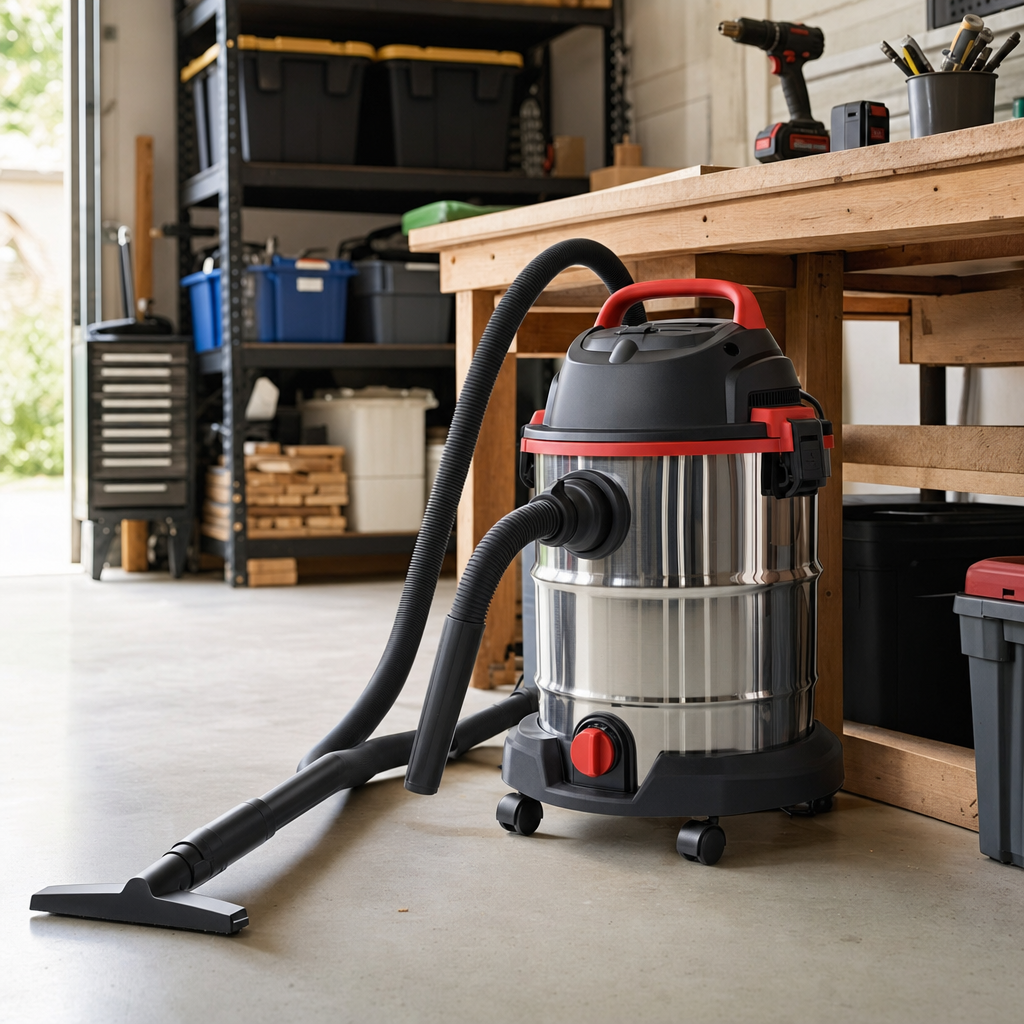
Introduction to Wet-Dry Shop Vacuums
When searching for the best shop vac, understanding the fundamental differences between standard household vacuums and heavy-duty wet-dry units is essential. Traditional upright or canister vacuums rely on delicate filters and smaller motors designed strictly for dry household debris like pet hair, dust, and carpet fibers. In contrast, shop vacuums are engineered to handle much harsher environments, ranging from fine drywall dust and heavy sawdust to standing water, broken glass, and metal shavings. This versatility makes them an indispensable tool for garages, basements, construction sites, and active woodworking shops where messes are unpredictable and often hazardous to conventional cleaning equipment.
The core design of a wet-dry vacuum involves a powerful bypass motor separated from a large debris collection tank. Unlike domestic vacuums where air passes directly through the motor for cooling, shop vacuums use a separate cooling fan, allowing them to ingest moisture safely without instantly burning out the electrical components. This separation of airflow is what enables the machine to seamlessly transition from sucking up dry wood chips in the morning to clearing out a flooded basement floor by the afternoon. Recognizing this mechanical advantage helps buyers evaluate which models align best with their unique household or workshop requirements.
Key Specifications to Evaluate
Evaluating the technical specifications of a shop vacuum requires looking closely at horsepower ratings, tank capacity, and airflow metrics. Peak horsepower ratings provided by manufacturers often reflect maximum theoretical output rather than continuous operational performance, so it is wise to focus on amperage and motor design instead. A larger motor draws more electrical current and generally sustains better suction over long periods. Additionally, tank capacity dictates how frequently you will need to empty the unit. Compact models holding two to five gallons are lightweight and portable, whereas larger twelve to twenty-gallon drums reduce interruptions during major renovations but become extremely heavy when full.
Airflow, measured in cubic feet per minute, and sealed suction, measured in inches of water lift, are the truer indicators of cleaning efficiency. High CFM ratings mean the vacuum moves a massive volume of air quickly, which is ideal for capturing large volumes of lightweight debris like sawdust. Conversely, high water lift indicates strong pulling power, crucial for lifting dense liquids or heavy objects through the hose. Finding the right balance between these two metrics depends entirely on your primary tasks, as heavy woodworking demands high CFM while plumbing or drainage tasks benefit from superior water lift capabilities.
Here are the primary technical metrics to compare before selecting a wet-dry vacuum for your space:
- Tank Capacity: Measured in gallons, determining overall size and weight.
- Airflow (CFM): Indicates how fast air moves through the hose for dry debris.
- Water Lift: Measures suction strength for pulling up heavy liquids.
- Hose Diameter: Standard sizes range from 1-1/4 inch to 2-1/2 inch for different debris types.
Filtration Systems and Air Quality
Filtration is arguably the most critical component when considering what makes a shop vacuum effective for indoor air quality. Standard shop vacuums often expel fine dust back into the surrounding air through their exhaust ports, which can irritate lungs and cover nearby surfaces in a fine layer of gray powder. To combat this, modern units utilize specialized multi-stage filtration systems. Foam sleeves are typically used for wet pickups to protect the motor from liquid splashes, while pleated paper cartridges handle everyday dry debris. Upgrading to high-efficiency particulate air filters ensures that microscopic particles, such as lead paint dust or drywall compound, remain trapped inside the canister.
Proper filter maintenance directly impacts the longevity and suction performance of any vacuum. When filters become clogged with fine particulate matter, the motor has to work significantly harder to maintain airflow, leading to overheating and reduced suction power. Many advanced models now feature automatic filter-cleaning mechanisms or external shakers that dislodge debris without requiring you to open the messy canister. Regularly brushing off dry filters or washing foam sleeves according to manufacturer guidelines ensures consistent operation and prevents unpleasant mold growth inside the tank during wet-dry transitions.
Practical Applications and Everyday Use
Deploying a shop vacuum effectively goes beyond simply turning it on and pushing it across the floor. In automotive detailing, specialized attachment kits with narrow crevice tools and soft upholstery brushes allow users to reach deep between car seats and extract embedded grit from floor mats. In woodworking environments, connecting the vacuum directly to power tools via dust collection ports captures sawdust at the source, dramatically reducing airborne particles in the workspace. Understanding how to utilize different nozzle attachments transforms a basic cleanup tool into a specialized maintenance system for diverse household and hobbyist projects.
Transitioning from dry cleanup to liquid extraction requires specific preparation to prevent motor damage and foul odors. Users must remove any paper filters or collection bags before vacuuming liquids, as paper disintegrates rapidly when wet and can ruin internal electrical components. Additionally, utilizing the built-in drain port located at the base of larger tanks simplifies the disposal of heavy wastewater, sparing operators from awkwardly tipping a twenty-gallon drum. Knowing these operational best practices ensures safe, efficient handling during unexpected household emergencies like overflowing washing machines or flooded patios.
Portability, Storage, and Accessories
Physical dimensions, weight distribution, and wheel configuration heavily influence the daily usability of a wet-dry vacuum. Large drum models with rear wheels and front casters maneuver easily across smooth garage floors, but they can be cumbersome to carry up flights of stairs or load into compact vehicle trunks. Wall-mounted units offer a space-saving alternative for dedicated workshops, keeping the floor clear and providing an exceptionally long hose to reach every corner of a two-car garage. Assessing your physical workspace layout helps determine whether you need a highly mobile wheeled cart design or a stationary wall-mounted configuration.
Storage solutions for accessories and power cords often separate frustrating user experiences from seamless ones. Vacuums equipped with onboard storage racks keep extension wands, utility nozzles, and crevice tools securely attached to the chassis, preventing misplaced components. Furthermore, the length and gauge of the power cord dictate your working radius without requiring an external extension cord. Cord-management wraps and quick-release designs save valuable time during setup and teardown, making regular maintenance feel much less like a chore.
Frequently Asked Questions
Can I use a shop vacuum for regular household carpets?
While a shop vacuum can physically suck dirt out of carpets, they lack the rotating brush rolls found in upright vacuums that agitate and lift embedded pet hair and deep-set dirt from household fibers.
Do I need to remove the filter when vacuuming water?
Yes, standard paper filters and dry collection bags must always be removed before picking up liquids. Using a paper filter for wet jobs will ruin the filter and potentially damage the motor.
What size shop vacuum is best for a standard home garage?
A medium-sized unit holding between six and twelve gallons provides a balanced compromise between adequate debris capacity and manageable storage dimensions for typical automotive and household tasks.
How often should shop vac filters be replaced?
Filters should be inspected regularly and replaced when they show tears, persistent clogging that washing cannot clear, or if you notice a distinct drop in suction performance during operation.
Article Was Generated By AI.